Showing posts with label meat. Show all posts

Tuesday, September 8, 2020

Benefits of not eating meat: Save money & the environment

What is the the true cost of eating red meat? I want to offer you some alternatives to eating red meat. Here are some benefits of not eating meat to save money and the environment.

Benefits of not eating meat to save money & the environment Domesblissity.com

Other sources of protein

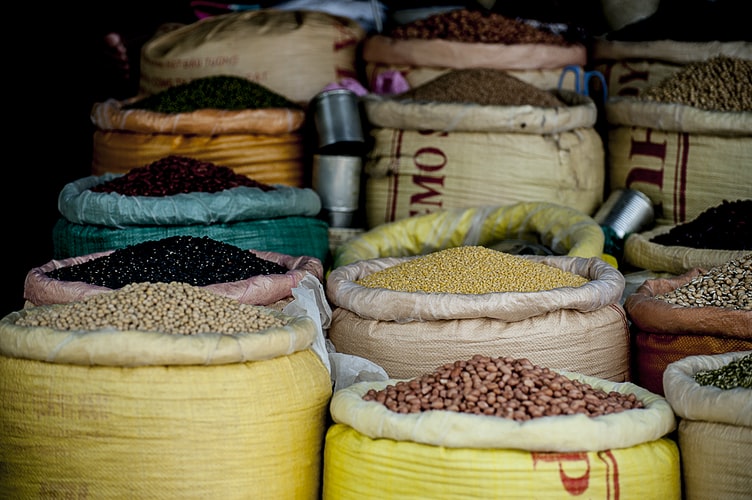
Contrary to popular opinion, red meat (as in beef or lamb, for example) isn’t the highest source of iron in our food. Obviously yes, red meat or liver is high but so are sardines, eggs, canned salmon, chicken, duck etc.
Benefits of not eating meat to save money & the environment Domesblissity.com

And then there’s the plant protein options like legumes (lentils, chickpeas), tofu, nuts, wholegrain cereals and green leafy vegetables, for example. For more info on protein sources and how much you actually need, check out this article for more information.

I must admit, I do love a nice piece of steak but I honestly can’t remember the last time I had one, let alone lamb. When I did buy beef more regularly, I’d look for whole rumps on special for $10 per kg or less and the butcher would slice it.

Looking at Coles website recently, the price per kg of red meat is outrageous and that’s why I don’t buy it. Also I know I can get my protein and iron from other, less expensive resources. Check out these cost examples from Coles (as at September 2020):

  • sliced rump steak @ $24.00/kg
  • sliced eye fillet steak @ $44.00/kg
  • sliced porterhouse steak @ $42.00/kg
  • veal sizzle steak @ $30.00/kg
  • lamb leg steak @ $28.00/kg
  • lamb back strap @ $50.00/kg

Cost on the environment

When you start to look at the harm that is being done to the environment in order to farm beef, it’s truly eye watering and very sad. Some quick stats:
Benefits of not eating meat to save money & the environment Domesblissity.com
  • Cows must consume over 7kg of vegetation to produce 500gm of meat.
  • Producing just one hamburger uses enough fossil fuel to drive a small car 32km.
  • A typical pig factory generates the same amount of raw waste as a city of 12,000 people.
  • Of all agricultural land in the U.S., 87 percent is used to raise animals for food.
  • In 2018 alone, NSW lost 60,800 hectares of woody vegetation – or about 200 times the size of Sydney’s CBD.

You can read more about the harmful effects on the environment by farming.

Alternatives to not eating meat to save money & the environment

So when you consider any or all of the above, it’s certainly a lot cheaper to eat other sources of protein which will help you reduce your grocery spend. Here are 5 quick tips:

  1. Consider 2 serves of fish per week
  2. Consider 2 serves of egg based dishes per week
  3. Consider more plant based meals
  4. Use lentils to replace mince/ground meat
  5. Use poultry like chicken, duck or turkey

There are so many recipes on the internet. You only have to look at Indian recipes for beautiful vegetarian meals. Here are some links to inspire you:

11 ways to use chickpeas

13 Indian style salads & vegetable dishes

10 easy vegetarian meals

Can you live without red meat?

Tuesday, May 19, 2015

Basic Stew

As we head into winter next month, the best part of this time of the year for me is the food, like stews and soups. Being a warm climate for 9 months out of the year pretty much, we miss out on good old fashioned hearty fare so I make the most of it the first sign of cooler weather. You can’t beat a simple stew to warm you from the inside out and this recipe is a great base for so many other dishes.
Nature’s got a great way of telling us to use what’s in season and all your root vegetables like carrots, sweet potato, parsnips and suede are all good for stews and are available now in the southern hemisphere. The best way to cook your stew is by slow cooking and using cheap cuts of meat like chuck or blade steak for example. 
I don’t use a lot of meat in my cooking only because it’s so expensive. I bulk it out with a lot of vegetables. One small piece of meat was enough for 2 adults and 2 children.
I don’t always dredge my meat in seasoned flour only because I might be running short on time. It is a crucial part of a good stew though. I put a couple tablespoons of plain flour in a ziplock bag, season well with salt and pepper and throw the meat in and give it a good shake so all pieces of diced meat are well coated.
After browning the meat in a little extra virgin olive oil, I add the quartered onions just to brown them up as well. There are some slow cookers on the market now with browning plates already in them. I might http://intactnews.org/node/138/1319461990/acquisition-erectile-dysfunction-circumcision have to look at getting one. This does make a basic stew a little more time consuming to make. You could brown the meat and onions in an ovenproof dish on the stove top to reduce the steps or even in the saucepan you would cook it in.
Pop the meat, onions and all your vegetables into the slow cooker (or the utensil your cooking it in), add a couple bay leaves and 1 cup of stock. I always like to add pumpkin to my stews because it breaks down and forms part of the sauce. If you wanted to change your basic stew into something exciting like an Indian curry or Moroccan ‘tagine’ for example, you would add your selection of spices to the oil before adding the meat. 
Lots of juice for mopping up with some crusty bread. Nothing better on cool night. Here’s hoping we get a few more before September when the weather warms up.
Basic Stew
  • diced meat (beef, pork, chicken thighs, lamb etc)
  • plain flour, seasoned with salt & pepper
  • extra virgin olive oil, for frying meat
  • any vegetables, preferably root vegetables that will hold their shape ensuring they are all cut roughly the same size (I throw whatever I have in the crisper including fresh tomatoes)
  • bay leaves
  • salt & pepper
  • 1 cup stock (any kind)

  1. Toss diced meat into seasoned flour and fry in a little olive oil until sealed and brown. 
  2. Add onions and toss until caramelised.
  3. Add meat and onions to slow cooker with all the vegetables and stock.
  4. Cook for desired time, stirring occasionally.
  5. Serve with mashed potato and/or crusty bread.

* This recipe can be adapted for slow cooking in a saucepan on the stove top or an ovenproof dish in the oven.